

Gypsy Moth is now the “old” name for a pest familiar to anyone who spent time around Muskoka this past year or two. It is now called the LDD moth, short for this insect’s latin name, Lymantria dispar dispar. In any case, your trees were probably affected by this insect whether you called it by the old name, new name or some other colourful name of your choosing.
LDD: A Growing Problem
LDD moth has certainly been a growing problem in Ontario. In 2019 it defoliated 47 thousand hectares of trees. By 2020 the number of defoliated hectares ballooned to a whopping 586 thousand hectares. Not to be outdone, 2021 wound up with a staggering 1.8 million hectares of defoliated trees – more than 3 times the size of Prince Edward Island.
This year, 2022, has all the signs and symptoms of being another banner year for the moth. Egg mass counts are at record levels. However, environmental conditions need to be just right before all those eggs turn into leaf-eating caterpillars. First, LDD eggs start to die at temperatures below -20 Celsius. This year’s winter, compared to last, is promising when it comes to the low temperatures. Second, a cool and wet spring allows a naturally occurring virus and a bacteria to significantly control LDD populations before they do too much damage. Any deviation from 2021’s hot and dry spring will go a long way towards naturally reducing caterpillar populations. However, it’s important to keep in mind that, unlike other forest pests, LDD populations can explode at any time. In a year or two they can circle back and get us again, even if their numbers have crashed.
The Danger to Trees
So far I’ve talked about the insect so let’s get into their effect on trees. LDD moth is known to have over 300 plant hosts that it will eat. Many trees can live through repeated defoliations but there are a few exceptions. For example, Oaks have a difficult time recovering and will often start losing limbs after a bad year. Two or more bad years can kill an oak while just one defoliation will usually kill evergreen trees like pine and spruce. Even the biggest, oldest, toughest trees can decline or die, especially when other environmental stressors are present such as drought, heat or poor soil health.
Coulson Brother’s Arboriculture plan for LDD
Even for homeowners, a comprehensive plan is the best approach to tackling this pest. This involves reducing insect populations as well as promoting plant health. As certified arborists and licensed exterminators we are able to bring a variety of tools to the job of controlling LDD and supporting tree health. First, we have a couple of biological controls that, when used properly, can vastly reduce insect populations. BTK is a bacteria that can be sprayed (usually twice) on trees and insects. For high value and exceptionally tall trees, Tree-azin is another biological product that can be injected into the trunks of trees providing excellent season-long control of LDD caterpillars. Both products are safe to use around people, animals, pollinators and water. BTK sprays are most useful in slowly reducing caterpillar populations over a large area while Tree-azin injections provide excellent and immediate control on individual trees. On a larger scale (multiple properties, forested areas, islands), BTK should only be applied by professional arborists and pesticide application companies. These applications are often applied via aircraft and are most effective when supported by a team of landowners, landowners’ associations, private arborists and municipalities looking to manage LDD. Large scale spray operations are designed to reduce insect populations over large areas and may have smaller impacts at the level of individual properties. Aerial applications do not cover forested areas uniformly, do not penetrate thick canopies and use reduced levels of product compared to ground applications. Aerial applications are a useful tool in combating LDD infestations over large areas but are unlikely to reduce insect populations to a tolerable threshold for the typical cottager.
Future Care of Trees:
With all of the damage done over the last couple years, it’s often not enough to just stop the bugs. Usually, defoliated trees will need additional care. Trees use lots of scarce nutrients to put out new leaves and they benefit from fertilization to replace these nutrients. Further, defoliation of trees often results in dieback of tree limbs. Dead limbs create hazards in trees and slow down a tree’s effort to heal itself and regrow. Removal of dead branches (and dead trees) helps to reduce the risks of living amongst the trees and it aids in their recovery.
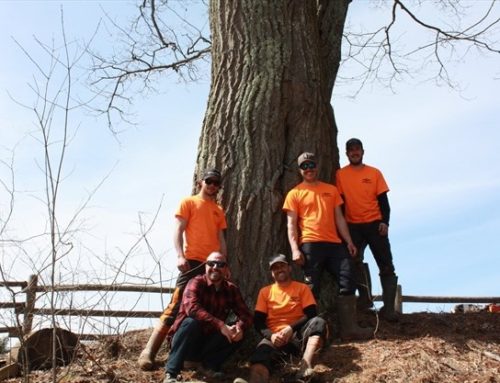
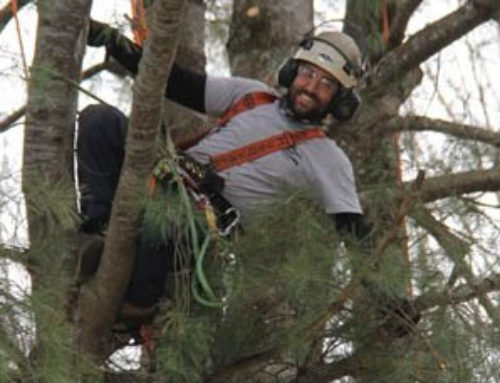
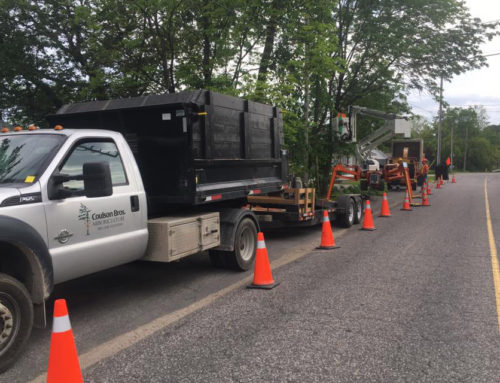
At Coulson Bros. Arboriculture we have pulled out all the stops to put together an excellent team of plant health care providers with brand-new, top of the line equipment to deliver our treatments. We have two new spray units, one boat-mounted and one truck-mounted, that allow us to reach higher into the tree canopy than any other local company. Our plant health care program is run by Muskoka’s only Board-Certified Master Arborist so you can be sure that you’re getting a program that is both safe for the land and good for the landscape. We also have an excellent staff of tree workers to prune and remove trees damaged or killed by LDD. So, if you have any questions or concerns about your trees, reach out to us for honest answers and a free evaluation of your tree-care needs.