“April is the cruelest month” according to T.S. Eliot in his poem “The Wasteland”.
March ended in Muskoka with a walloping ice storm whose effects have ushered in a cruel spring for our trees.
It hurts to see so many trees damaged or destroyed because trees foster a sense of place,
connecting us to the cottage, our homes and something larger than ourselves.
So, when the trees are harmed, so is our sense of community.
The good news is that trees can benefit from humans tending to their injuries and needs.
As professional arborists, we have seen this sort of damage before and the recovery that is possible.
We would like to offer a few suggestions as to how to best manage the aftermath of the storm and how we can encourage the recovery of our forest.
1. Stay safe!
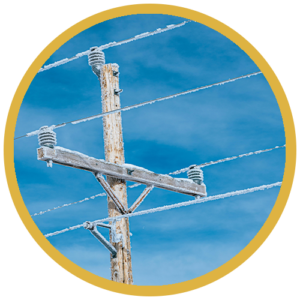
There are still many places with trees on wires and downed power lines. It is important to treat all downed lines as if they are alive with electricity and dangerous. Stay well away from these wires or any tree or branch touching the wires. Also, be aware that many trees and tree branches were damaged or broken but still remain standing. There are many hidden dangers still in the trees. For trees and branches that are lying on the ground, be aware that tension on these tree parts can cause them to spring free with incredible force when cutting is going on. All in all, storm damage clean-up should be handled with extreme care.
2. Consider restoration pruning.
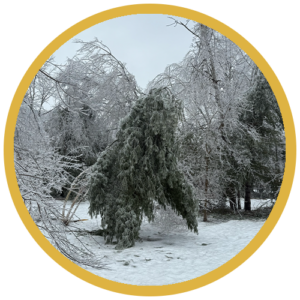
While many trees have been destroyed, most trees can recover from storm damage. Pruning broken branches, removing branch stubs and inspecting the canopy for remaining structural damage are all important steps in restoring your trees. Consulting with an arborist will help you determine which trees can be saved and which are dangerous. An arborist can help you weigh these decisions and create a restoration plan.

3. Plant Health Care is crucial.
Storm damage creates a stressful environment for trees. Trees need a lot of energy to repair cuts and grow new limbs but the loss of branches makes it difficult for them to produce the energy they need. When trees experience an energy deficit, they can decline over several years. During this time they are very vulnerable to insect and disease issues. Scientific research has clearly shown that fertilization and tree pest management are instrumental in a tree’s recovery process after significant canopy loss.
While the damage happened over a couple of days, recovery can take years.
This is acceptable as trees operate on a much slower schedule than humans do…we just have to be patient with our trees.
In the meantime, if you have damaged trees that need assessing, pruning, or a little bit of help, please reach out to our team of certified arborists at Coulson Bros. Arboriculture.
Jeremy Sayers
Board-Certified Master Arborist
(705)388-5633
[email protected]